
The approach to modern hernia surgery has fundamentally changed over the past 20–30 years: the goal is no longer simply to close the defect, but to achieve functional, anatomical reconstruction that can significantly improve quality of life and reduce the chance of recurrence to a minimum.
Restoring the abdominal wall – not merely "patching"
The goal of modern hernia surgery is not just to "remove" the hernia, but to restore the anatomical and functional integrity of the abdominal wall. Significant advances in hernia surgery outcomes can be achieved through the use of laparoscopic and robotic surgical techniques and the adoption of contemporary surgical principles.
The 8 most important principles
Low recurrence – tension-free reconstruction
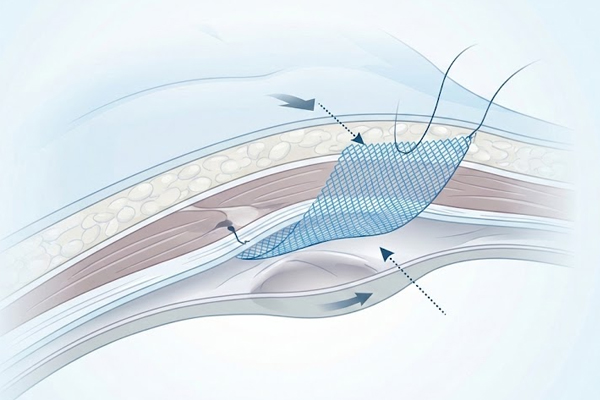
Outdated tension-based suture techniques are associated with high recurrence rates. The mesh-based, tension-free principle has now become standard, in which the layers of the abdominal wall are separated using appropriate surgical techniques so that defects can be reconstructed without tension.
Respect for anatomy – physiological reconstruction
- Restoration of muscle layers and function
- Minimisation of nerve damage and chronic pain
Reducing chronic post-operative pain
- Nerve preservation
- Minimising foreign material in sensitive areas
Patient-tailored surgical technique selection
A "one size fits all" approach does not work – instead, tailored surgery is required. When planning the surgical approach, the following must be taken into account:
- The type and location of the hernia
- The size of the defect
- The number of recurrences and previous surgeries
- The patient's general condition, body type, lifestyle, physical capacity, and occupation
- The patient's comorbidities
Minimally invasive approach
- Less tissue trauma
- Faster rehabilitation
- Shorter hospital stay
- Lower surgical site infection rate
- Optimal mesh placement
- Avoidance of mesh infection
Reducing infection and complications
- Minimising mesh infection with antibiotic prophylaxis
- Optimal mesh placement in retromuscular position
Functional and aesthetic outcome
- Restoration of abdominal wall function
- Normal body contour
Rapid rehabilitation and quality of life
- Early mobilisation
- Short sick leave
The advantage of the minimally invasive approach
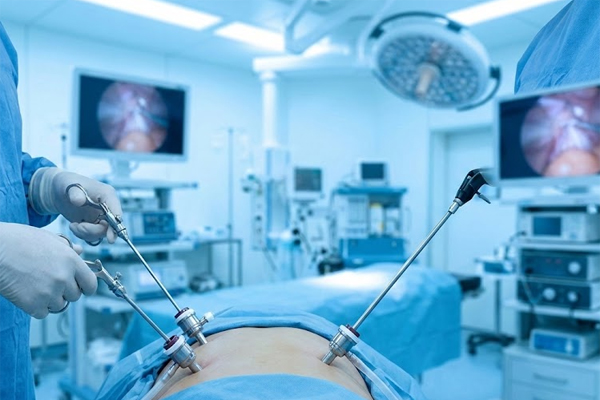
Laparoscopic and robotic surgical procedures involve significantly less tissue trauma, enabling faster recovery, shorter hospital stays, and lower complication rates. With the help of modern technology, the surgeon is able to place the mesh optimally, minimising the risk of infection and recurrence.
Summary
The goal of modern hernia surgery is not merely to "remove" the hernia, but to restore the anatomical and functional integrity of the abdominal wall. Through laparoscopic and robotic surgical techniques and a personalised approach, quality of life can be significantly improved and the chance of recurrence reduced to a minimum.