

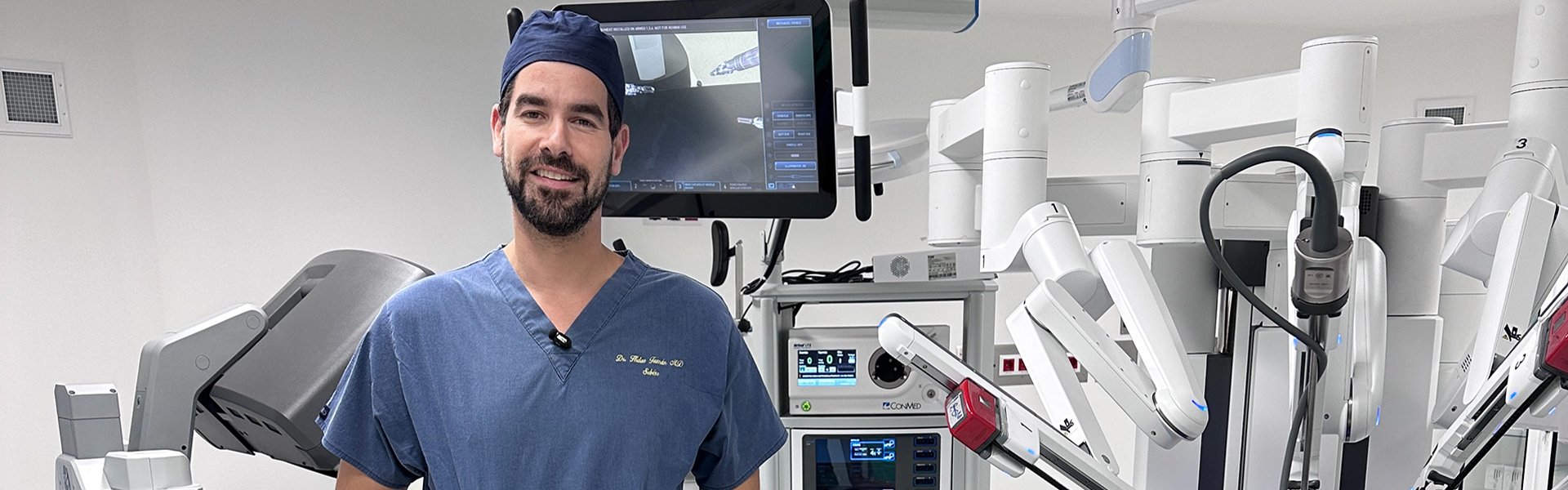

Comprehensive and complex hernia surgery procedures with modern minimally invasive techniques.
In Harmony with Technology and Science
Personalized Therapy
Safe at Wáberer Medical Center Surgical Center
Please book a consultation with Dr. Tamás Hidas to select a personalized surgery type.
Contact UsRobotic Surgery
Minimally invasive procedures using the most advanced Da Vinci robotic surgery system. Three-dimensional vision, tenfold magnification, and precise movements for the best possible results.
Laparoscopic Surgery
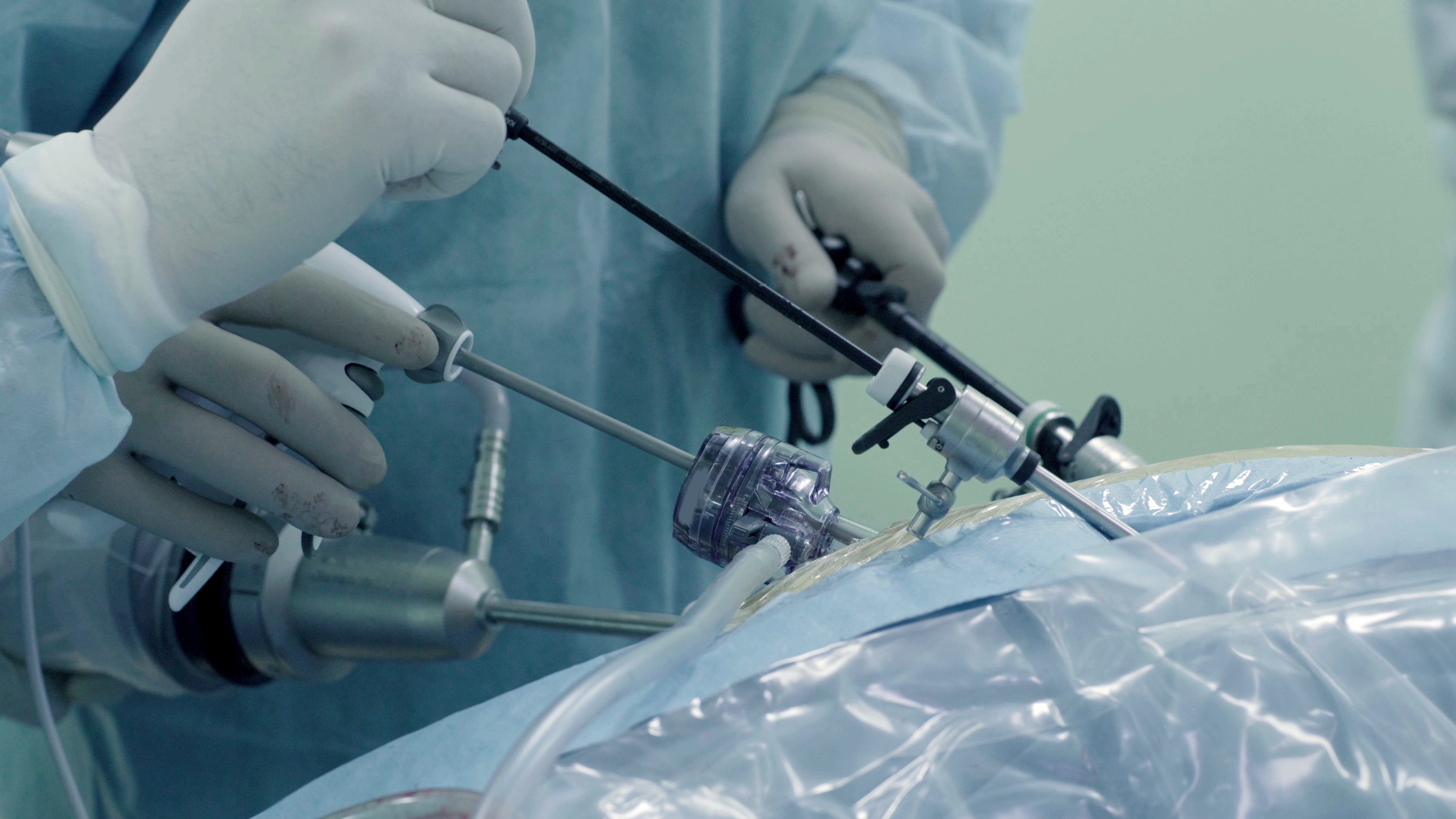
Minimally invasive technique with small incisions, resulting in faster recovery and less pain. Safe and proven method for various abdominal surgical procedures.
Open Surgery
Traditional surgical technique necessary for complex cases. Provides full access to the surgical area, enabling the most complex interventions.
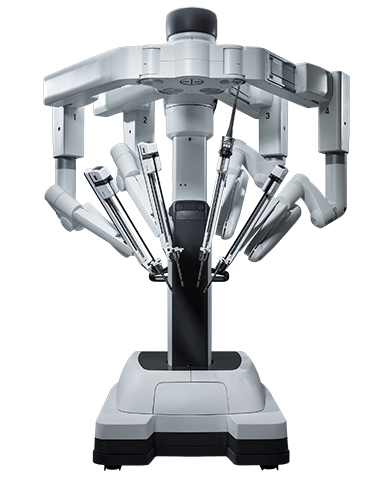
Robotic Surgery
Discover the future of surgery! The Da Vinci robotic surgery system offers unparalleled precision, minimal invasiveness, and faster recovery. With our experienced surgical specialist, you are in safe hands.
Learn MoreCollaborating Partners and Professional Centers





Frequently asked questions
Below you will find answers to the most common questions about Da Vinci robotic surgery.
Robot-assisted hernia repair using the da Vinci system is a modern, minimally invasive technique that allows the surgeon to perform the repair with greater precision and control.
During the procedure, instruments are inserted through a few small incisions. The surgeon sits at a console and controls the instruments, which are capable of extremely fine movements, while viewing a magnified, three-dimensional image of the surgical field.
The robot does not operate autonomously — the surgeon controls every movement, and the robotic arms replicate the surgeon's hand movements precisely.
1. Smaller incisions and less pain
- Only a few small cuts are required.
- Most patients report less pain compared to traditional open surgery.
2. Faster recovery
- Most patients return to daily activities sooner.
3. Greater precision for more durable hernia repair
- Magnified, HD 3D view of the surgical field.
- Robotic arms provide extremely precise movement.
- Allows more accurate and comfortable mesh placement when needed.
4. Greater range of motion
- The robot's key advantage lies in the flexibility of its instruments – 2 joints at the end of each surgical tool provide full freedom of movement.
- This enables technically complex procedures to be performed with greater ease and precision, which would not be possible with conventional laparoscopic instruments.
5. Reduced risk of certain complications
- Lower chance of wound healing problems and surgical site infections compared to open surgery.
- More precise dissection means less damage to surrounding tissue, better nerve preservation, and therefore a reduced risk of chronic pain.
Robotic surgery (most commonly using the da Vinci system) is now suitable for treating almost all types of abdominal wall hernias (inguinal hernia, umbilical hernia, incisional hernia, rectus diastasis, lateral hernias, etc.).
- Particularly useful for larger or recurrent hernias.
- Effective even in hard-to-reach or narrow areas thanks to improved visualization and precision.
Yes. Robotic systems have been used worldwide for approximately two decades with excellent safety outcomes. If necessary, the surgeon can switch to a different technique, though this is rarely needed.
The choice of technique is not based solely on patient preference. The final decision is typically made jointly by the surgeon and the patient, taking into account medical and biological factors.
When selecting the surgical technique tailored to the patient, the following must be considered:
- Type and location of the hernia
- Size of the defect
- Number of recurrences and previous surgeries
- Patient's general health, body type, lifestyle, capacity for physical exertion, and occupation
- Patient's comorbidities
- Individual needs and goals of the patient
All of this can only be determined within the framework of a medical consultation.
A multidisciplinary diagnostic approach:
- Imaging: ultrasound, CT scan
- Anaesthesiology – risk profile assessment: considering lifestyle, workload, body type, and prior medical history. Recurrence risk estimation and selection of the optimal mesh type.
It is difficult to give a general timeframe, as it varies greatly depending on the type of hernia and the surgical approach used (for example, it can range from approximately 1 hour to 8 hours or more in some cases).
Yes, the vast majority of robot-assisted hernia repairs involve the use of mesh, similar to laparoscopic and modern open surgical techniques. The purpose of the mesh is to provide durable reinforcement and prevent recurrence.
General guidance:
- Pre-operative assessment – consultation
- Appropriate diagnostics: ultrasound, CT
- Optimisation of medications and diet
- Smoking cessation if required
- Weight loss if necessary
- The procedure is performed under general anaesthesia in a safe clinical setting, with anaesthesiologists, radiological support, and an on-call physician.
- You will be able to get up and move immediately after the operation.
- Most patients can go home within 1–2 days of surgery.
Recovery after surgery
- After discharge, everyday movement (walking, using stairs, etc.) is immediately possible, and lighter activities can be resumed within a few days.
- Lifting more than 5 kg should be avoided for 2–3 weeks, and heavy physical work or strenuous sport is not recommended during this period.
- After this, lighter sport can be gradually resumed up to the pain threshold.
- Recovery is monitored through follow-up appointments.